
Prime Minister Narendra Modi will on Friday launch two schemes of the Reserve Bank of India (RBI) that may go a long way in changing how the household sector invests, and complains if anything goes wrong with their savings. These schemes - retail direct and an integrated ombudsman - will be launched by the Prime Minister virtually, in the presence of Finance Minister Nirmala Sitharaman. With the introduction of retail direct, a common man can directly take a position in government securities (G-Sec), considered to be the safest asset class a sovereign can offer.

S&P Global Ratings on Monday expressed scepticism over allowing corporate ownership in banks given India's weak corporate governance amid large corporate defaults over the past few years. It also said that the Reserve Bank of India (RBI) will face challenges in supervising non-financial sector entities at a time when the health of financial sector is weak. Last week, a RBI panel had proposed that large corporate may be permitted to promote banks, as well as raising the cap on promoters' stake in private sector banks to 26 per cent, from15 per cent at present.
.jpg)
Companies are legally allowed to invest in markets in India, but the practice has seldom stirred central bank concern until recently, when they have become much more active players.

The central bank's move comes against the backdrop of the government efforts to crackdown on entities, that are illegally raising large amounts of money from the public.

Of the 2,562 customer complaints received between January 2020 and March 2021, a majority relate to illegal apps. At least two dozen suicide cases have been reported, perpetrated by the harassment by loan app operators, points out Tamal Bandyopadhyay.

The cash crunch following demonetisation and transaction fees that do not cover costs are among the reasons why the sector is struggling.

The central bank's tough new rules spell major changes in the competitive landscape for financial services audits.

It may be a 'no-go' for banking licences to large industrial houses.

The Reserve Bank of India (RBI) on Monday issued new norms to regulate the fast-growing pre-paid cards industry and asked all the entities to comply with the guidelines within three months.

Subhash Chandra Garg, the former finance secretary who was shunted out of the finance ministry within three weeks of Modi-2.0 government's first budget last year, on Saturday alleged that new Finance Minister Nirmala Sitharaman got him transferred out.

The RBI is of the view that it cannot carry out satisfactory due diligence for granting registration because the funding is from a jurisdiction that has been identified by FATF as having weak measures to combat money laundering and terrorist financing.

The Indian financial system's asset quality improved despite the pandemic, but it could be due to special dispensations by the regulator, and banks would likely see increased stress on their books once the schemes expire. According to the annual trend and progress report of the Reserve Bank of India (RBI) released on Tuesday, the data available for this financial year so far indicate that banks' bad debts have moderated while provision coverage ratios (PCRs), capital buffers as well as profitability indicators have improved relative to pre-pandemic levels.

The Reserve Bank of India (RBI) on Friday said it will maintain comfortable liquidity conditions and conduct market operations in the form of outright and special open market operations. It will conduct on tap targeted long-term repo operations (TLTRO) with tenors of up to three years for a total amount of up to Rs 1 lakh crore at a floating rate linked to the policy repo rate.

If the policy is extended to NBFCs and co-operative banks, they will have to disclose divergence in asset classification and provisioning during RBI inspections in their audited financial reports. Till now, these entities have been exempted from this. At present, there are more than 98,000 co-operative banks and 10,000 NBFCs. Sources said the RBI would concentrate on the top 50 co-operative banks and NBFCs.

Isn't it time to review the 'fit and proper' criteria for banking licence, particularly with reference to individuals applying for it, asks Tamal Bandyopadhyay?

Gold loan is currently the fastest-growing loan category (among the various types disbursed to individuals). On February 26, 2021, the outstanding loan against gold jewellery stood at Rs 56,596 crore. By February 25, 2022, it had risen to Rs 71,408 crore, a year-on-year growth of 26.2 per cent, according to the Reserve Bank of India's (RBI's) data. Several factors are driving the demand for gold loans.

Most major corporate houses, such as the Tata group, Birla group and Reliance Industries, besides non-banking financial companies like L&T Finance, M&M Financial Services and the Shriram group, are said to be interested in setting up new banks.

In view of the economic shock caused by the COVID-19 pandemic, Reserve Bank of India (RBI) on Friday asked scheduled commercial banks and co-operative banks not to make any dividends for the financial year ended March 2020. In view of the ongoing stress and the heightened uncertainty on account of the pandemic, RBI said it is imperative that banks continue to conserve capital to support the economy and absorb losses, if any. The decision is based on review of the September quarter financial performance of banks.

Bankers and executives involved in ATM operations said challenges abounded in this segment.
The Reserve Bank of India (RBI) clarification on the final norms for new bank licences has much to mull on for the many entities interested. It has clearly ruled out any benefit to the new entrants in terms of more time to meet the cash reserve ratio/statutory liquidity ratio (CRR/SLR) requirements.

The latest roadmap for exempts banking, insurance and non-banking finance companies

"RBI will given additional licences" for setting up banks in the country, he said presenting the budget for 2010-11 in the Lok Sabha.

Regulator wants to change NPA classification and hike capital requirement.

A few days back, Finance Minister Nirmala Sitharaman urged the start-up community and public to deal in cryptocurrency with caution because everything that was floating around was not currency. In the first week of August, the country's top nine crypto exchange platforms were summoned by the Directorate of Enforcement (ED) in Hyderabad. The exchanges were questioned for money laundering, especially over a number of Indian non-banking financial companies and their fintech partners for predatory lending practices in violation of the Reserve Bank of India (RBI) guidelines and by using tele-callers who misuse personal data and use abusive language to extort high interest rates from the loan takers.

Since the bankcuptcy law came into effect from December 2016, with every quarter, the recovery rate has progressively been going down, notes Tamal Bandyopadhyay.

Private equity (PE) is set to play a bigger role in banks. Of 21 recommendations accepted by the Reserve Bank of India (RBI) out of 31 made by its Internal Working Group (IWG), its stance on non-promoter holdings in private banks is seen with excitement, though it doesn't refer to PEs explicitly. On non-promoter holdings in these banks, the RBI said this will be capped at 10 per cent of the paid-up voting equity share capital in the case "of natural persons and non-financial institutions and entities"; and "at 15 per cent for all categories of financial institutions, entities, supranational institutions, public sector undertaking, or the government." While this is a modification of the IWG's stance for the non-promoter holding in banks at up to 15 per cent, it does open up a huge window for PEs, all the same. This is because, while the RBI has remained silent on the eligibility of industrial houses for bank licences, fresh high-quality capital in large amounts can only come from PEs.

The Reserve Bank of India (RBI) has clarified that loans which have remained standard without any defaults as of March 1, 2020, will be eligible for restructuring under the pandemic-related resolution framework issued in August.

In HDFC Life, the company has to pare 1.43 per cent, and in HDFC Ergo, it has to pare only 0.58 per cent.

'The ship has been stabilised.' 'For the last 6-7 quarters, profitability is stable around Rs 250-Rs 300 crore.'

'People who have unaccounted money often park it in unregulated deposit schemes.' 'Curbing illegal deposit-raising activity will also carry forward the government's drive against black money.'

Why can't we have a sunset clause for the ARCs, which is a global norm? questions Tamal Bandyopadhyay.

A lot depends on how Srei shapes up under the new administrator and his team, which is critical for investors' interest.

Under Section 71 of the legislation, which took effect this month, corporate bond issuers have to create a debenture redemption reserve equivalent to at least 50% of a planned bond sale before the maturity of the security.
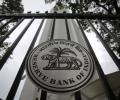
The deadline for officers to decide on their career path in the biggest organisational rejig in the central bank's 85-year history ends on January 31. The immediate fallout could be its disruptive impact on the supervisory process for 2020 -- and beyond -- given the manpower shortfall, even as more entities are set to come under closer central bank scrutiny.

The problem for the NBFC sector is the funding inertia by banks and not lack of funds.

In 2009, the UPA government, had announced a slew of measures to boost liquidity in NBFCs. These included a scheme for providing liquidity support to NBFCs having assets size of over Rs 100 crore through a SPV.

NBFCs which have not met Sebi criteria will face tough action.

RBI's oversight cadre move creates HR trouble, officers threaten agitation.
'Facilitating conversion of well-run NBFCs into banks is urgently needed.'
